tech-notes-and-questions
Concurrency VS Parallelism
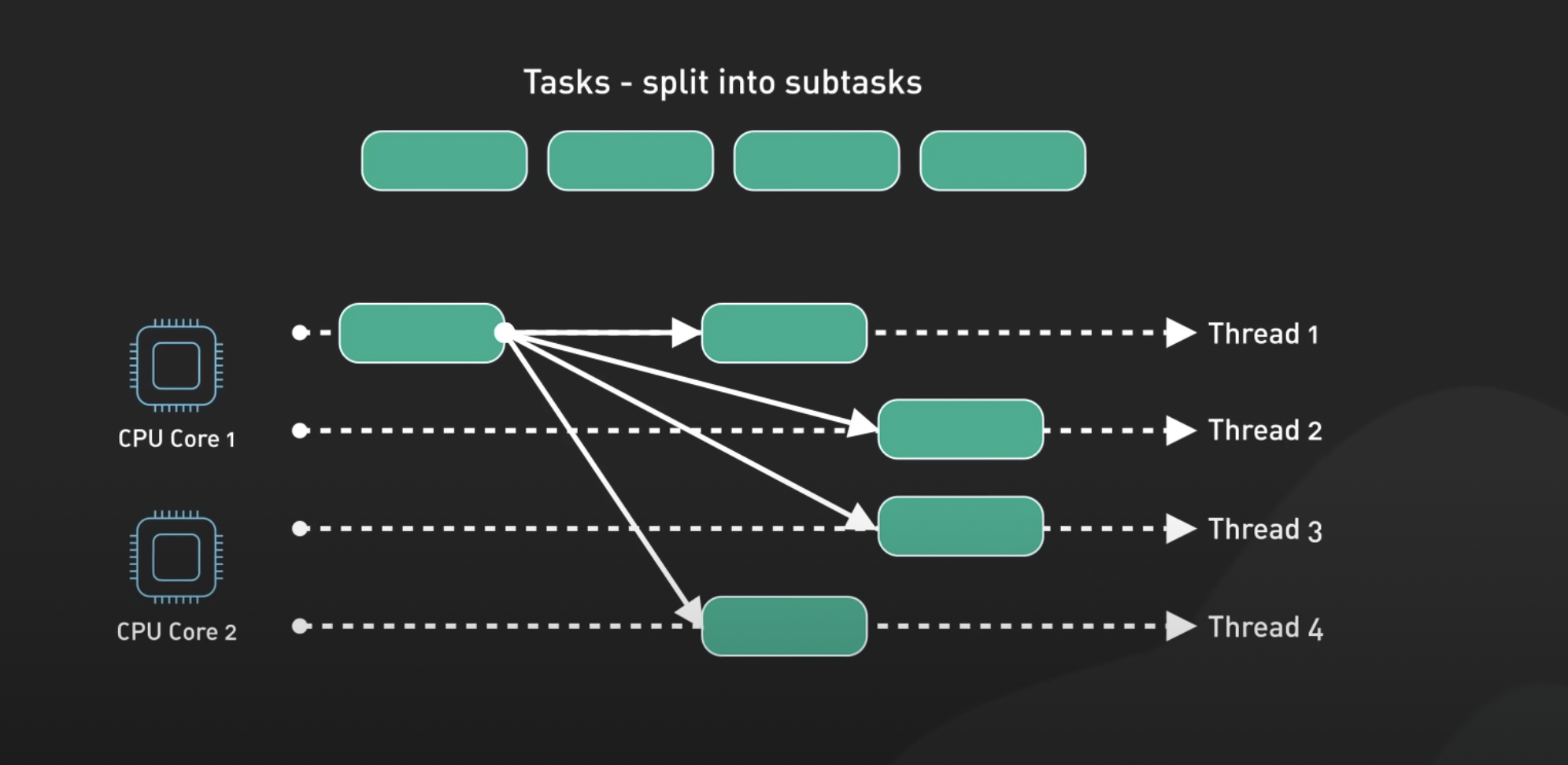
Concurrency is one CPU alternating between multiple tasks by context-switching, so there is progress in all of those tasks.
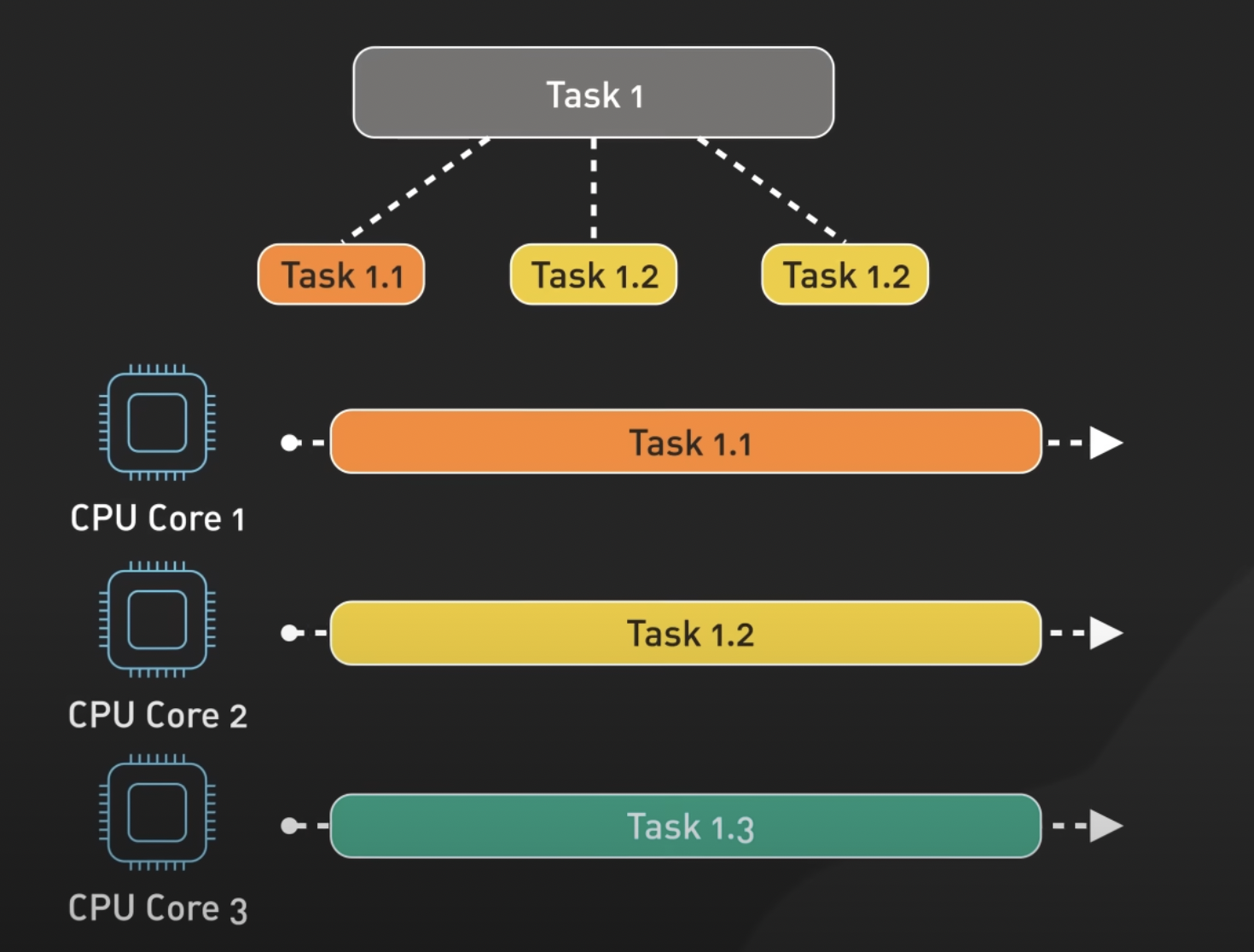
Parallelism is multiple CPUs working on multiple tasks; each core handles a different task independently at the same time.
Concurrency
Definition
Concurrency refers to the ability of a system to handle multiple tasks at the same time by allowing them to make progress. This doesn’t necessarily mean they are being executed simultaneously; rather, it means that tasks are overlapping in execution.
Key Characteristics
- Tasks can be interleaved on a single core or run simultaneously on multiple cores.
-
It focuses on the structure of the program to allow multiple tasks to make progress.
- Concurrency is often used in systems with shared resources where tasks may need to wait for one another.
Example
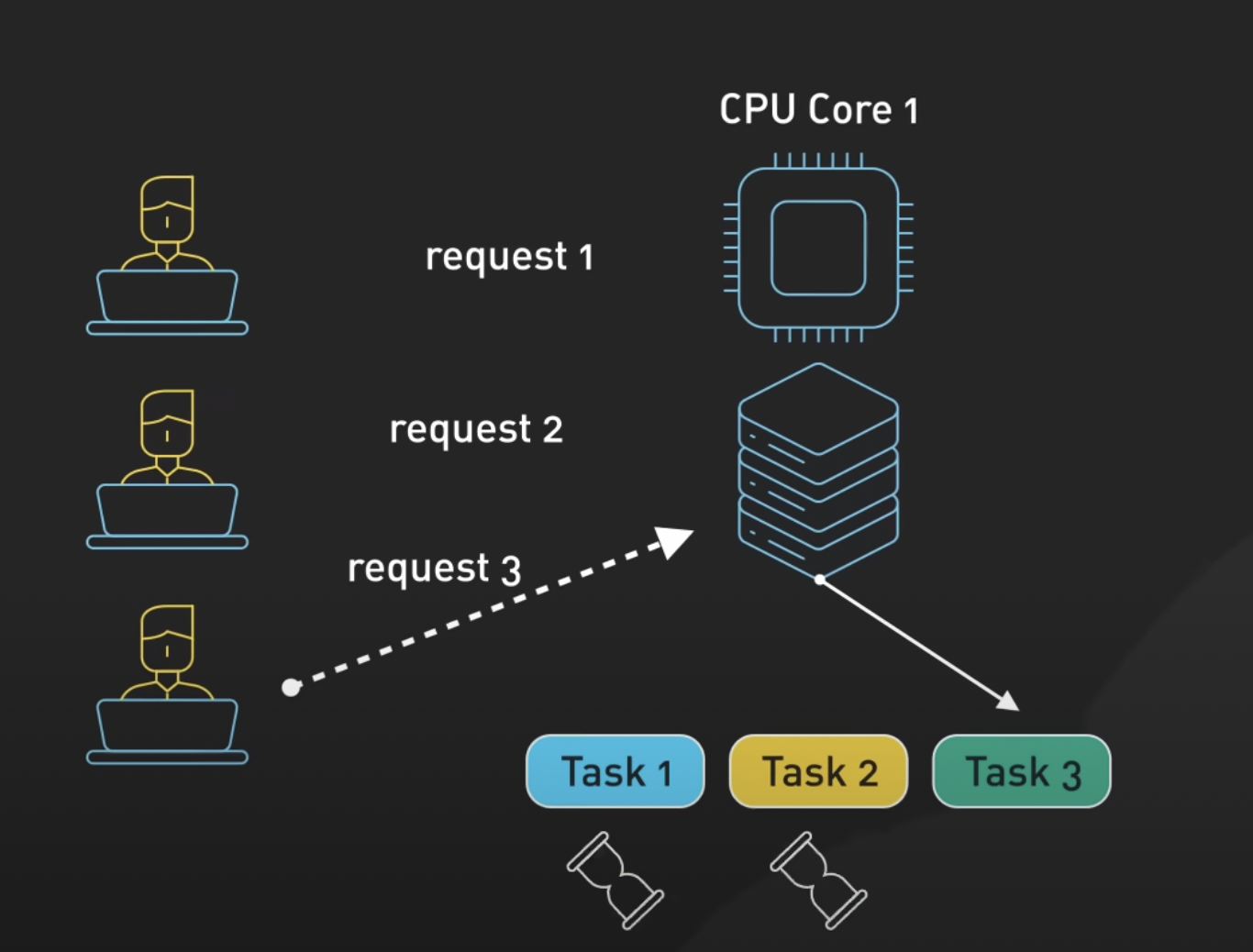
In a web server handling multiple requests, the server can start processing one request while waiting for I/O operations (like database queries) to complete for another request.
Parallelism
Definition
Parallelism is a specific form of concurrency that involves executing multiple tasks simultaneously, typically on multiple processors or cores. It is concerned with the actual simultaneous execution of tasks.
Key Characteristics
- Tasks run at the same time, using multiple CPUs or cores.
- It aims to reduce the overall execution time of a program by dividing tasks into smaller subtasks that can be processed concurrently.
Example
- A program that processes an image by splitting it into sections and processing each section on a separate core is an example of parallelism.
- Video rendering benefits from parallelism by processing multiple frames simultaneously across multiple cores.
- Machine learning can leverage parallelism by distributing the training across multiple CPUs.
Summary
- While concurrency and parallelism are different, they are closely related. Concurrency can make use of parallelism for efficient execution.
- Through concurrency, a complex task can be split into smaller independent tasks—making it easier to take advantage of the parallelism of those subtasks’ execution.